Patti Savard- Guest Blogger
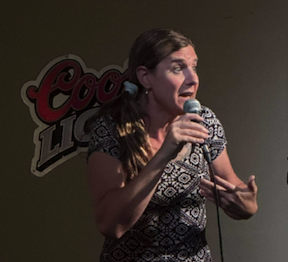
In a bar not known for its queer-friendly energy, a man in a ballcap pulled me aside after my set.
“You were funny, girl… and you had me fooled.”
It wasn’t an insult. There was no hesitation in his voice. Just a moment of human connection — simple, honest, and unexpected.
I’m a transgender woman and a stand-up comedian. This Pride Month tour was full of contrast: one day performing at Penticton, BC’s vibrant Pride festivities, and the next, competing with the pool table in a rough bar.
Many of the shows were in rural parts of British Columbia and Alberta — places where rainbow flags are rare, and trans visibility even rarer. I’d been warned about some of the towns. In a few cases, our posters drew online backlash just for including a Pride flag. One even led to a death threat we had to report to Meta.
But what I found in the rooms surprised me.
The loud, angry voices from the internet didn’t show up in person. Sure, some people quietly left when I outed myself as trans — in true Canadian fashion. I still thanked them for “coming out.”
Some of my most memorable shows happened in the very places I feared would be least welcoming. Instead of hostility, I was often met with curiosity, warmth, and laughter.
After one set, a woman approached me and said:
“You changed my mind. I’ve had some bad experiences with trans people, and I didn’t think I’d relate to you at all. But the way you opened up was approachable and hilarious.”
She didn’t say it to flatter me. She said it because something in her had shifted.
That shift isn’t my job. It’s not my burden. But I do think it’s a sign of something worth paying attention to.
We talk a lot about “safe space” in queer and trans communities — and for good reason. We need spaces built for us, by us. But what happens when we find ourselves outside of those spaces? What happens when we show up fully as ourselves in places where we’ve been told we don’t belong?
I don’t think safety is guaranteed in those moments. But I’ve learned that the energy we bring into a space can shape the energy we get back. Not always. Not without risk. But we have more power than we think. We’re not only at the mercy of the room — we help make the room.
I’m not suggesting anyone put themselves in danger for the sake of education. Nor do I believe trans people owe anyone an explanation for who they are. But I do believe that allies aren’t born — they’re grown. And sometimes that growth begins in the most unlikely moments: after a comedy show, during a shared laugh, or in the quiet honesty of a stranger’s admission.
Right now, in a time when anti-trans rhetoric is growing louder, we need those moments. We need our allies. And we need to stay open to the possibility that connection can still happen — one room, one conversation, one laugh at a time.